Schools today are supporting a wider range of student needs than ever before. Alongside delivering high-quality education, there’s an increasing focus on creating environments that promote wellbeing, encourage inclusion, and help every pupil thrive. For many schools, that means providing dedicated spaces where students can regulate their emotions, reduce sensory overload, or simply take a break from the busy school day.
That’s where modular sensory rooms for schools come in. Designed specifically to support students with a variety of sensory and emotional needs, these purpose-built spaces offer a practical alternative to converting valuable classrooms or other teaching areas. Installed separately from your main school building, they provide a calm, controlled environment without disrupting everyday learning or reducing much-needed teaching space.
Whether you’re looking to enhance your SEND provision, improve student wellbeing or future-proof your school estate, a modular sensory room offers flexibility, accessibility, and room to grow. In this guide, we’ll explain what modular sensory rooms are, how they benefit schools, what features to consider, and everything else you need to know before investing in one for your setting.
What Is a Modular Sensory Room?
A modular sensory room is a purpose-built, standalone building designed to provide a calm, supportive environment where students can regulate their emotions, reduce sensory overload, and feel safe away from the demands of a busy school day. One of the biggest advantages of a modular sensory room is that it doesn’t require schools to sacrifice valuable teaching space. Rather than converting an existing classroom, office, or meeting room, a modular building is installed elsewhere on the school site. This means you can expand your facilities while keeping your current learning spaces exactly as they are.
Because they’re purpose-built, modular sensory rooms can also be tailored to suit the needs of your school. Whether you need a compact space for one-to-one sessions or a larger room that supports small group activities, the layout, equipment, and finishes can all be designed with your students in mind.
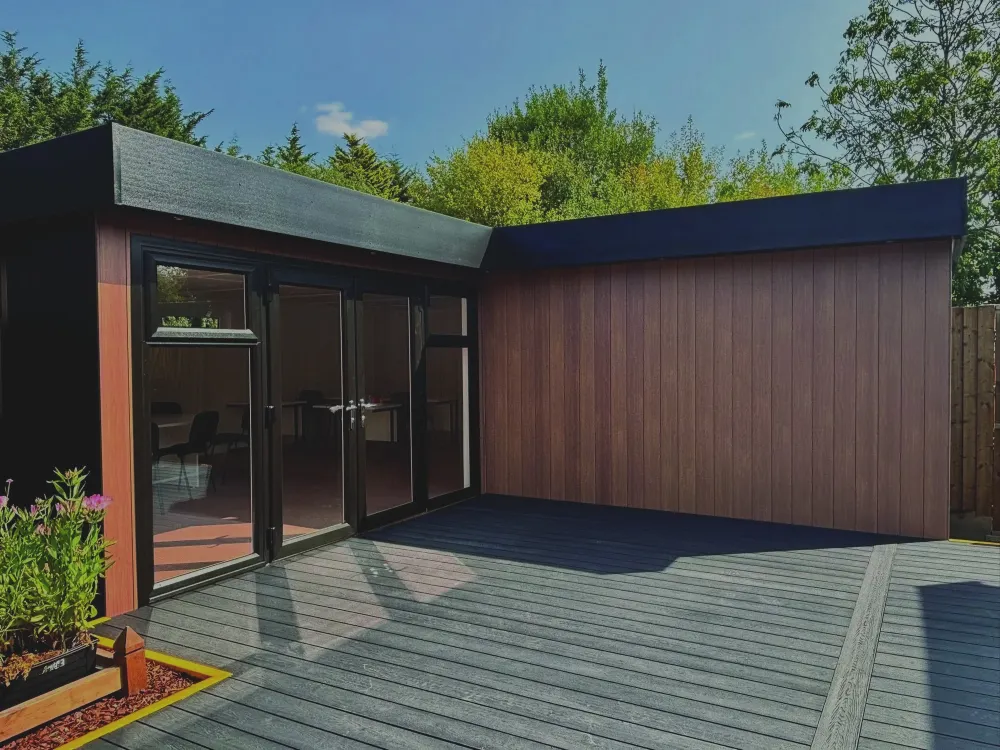
Schools use modular sensory rooms in a variety of ways. Some provide scheduled sensory sessions as part of a student’s support plan, while others offer a quiet space for emotional regulation, occupational therapy, nurture groups, or wellbeing breaks throughout the day. They can also be used to help students prepare for learning, recover after challenging situations, or transition back into the classroom feeling calmer and more focused.
Although sensory rooms are often associated with supporting pupils with Special Educational Needs and Disabilities (SEND), their benefits extend much further. Students with varied learning disabilities, autism, ADHD, sensory processing differences, anxiety or emotional regulation needs can all benefit from having access to a dedicated sensory space. Many schools also find these rooms support wider wellbeing initiatives, providing a valuable resource for any student who may need a calm environment to reset and refocus during the school day.
What Are the Benefits for Schools?
Modular sensory rooms for schools offers much more than an additional space on your school site. It can become an important part of your school’s wellbeing and inclusion strategy, benefiting students, staff and families alike.
- Improved Emotional Regulation
Modular sensory rooms provide a calm, low-stimulation environment where pupils can manage their emotions, regulate sensory input and recover from feeling overwhelmed. This can help students return to lessons feeling calmer and better able to engage with learning.
- Better Classroom Readiness
Short sensory breaks can improve focus and concentration, making it easier for students to transition back into the classroom. Whether used before a lesson or after a challenging activity, these spaces help pupils feel ready to learn.
- Reduced Stress and Anxiety
For students who experience anxiety or sensory overload, having access to a dedicated calm space can make a significant difference. Sensory rooms offer a safe environment where pupils can decompress before returning to their usual routine.
- Supporting Inclusive Education
Every student has different needs, and a modular sensory room gives schools another way to provide personalised support. It complements existing SEND provision while helping create an environment where all learners feel valued and supported.
- Flexible Throughout the School Day
A modular sensory room can be used in many different ways, from one-to-one interventions and occupational therapy sessions to nurture groups, wellbeing breaks and emotional regulation support. Its flexibility means it can adapt to the changing needs of your school.
How Schools Typically Use Modular Sensory Rooms
Every school uses its sensory room differently, depending on the needs of its pupils. The flexibility of a modular sensory room means it can support a wide range of activities throughout the school day.
Some of the most common uses include:
- Scheduled sensory sessions to help pupils develop self-regulation skills as part of their individual support plans.
- Emotional regulation breaks for students who need time away from a busy classroom environment.
- One-to-one support with teachers, teaching assistants or pastoral staff.
- Small group interventions focusing on social skills, communication or emotional wellbeing.
- Nurture sessions that provide additional support for pupils experiencing emotional or behavioural challenges.
- A calm space before returning to class, helping students reset, regain focus and re-engage with learning.
By providing a dedicated environment for these activities, modular sensory rooms help schools deliver more personalised support while creating a calmer, more inclusive learning experience for all pupils.
What Features Should a Modular Sensory Room Include?
Every school’s requirements are different, so there’s no one-size-fits-all solution. The best modular sensory rooms are designed around the needs of your pupils, with layouts, equipment and finishes that can be tailored to your setting.
- Sensory Lighting
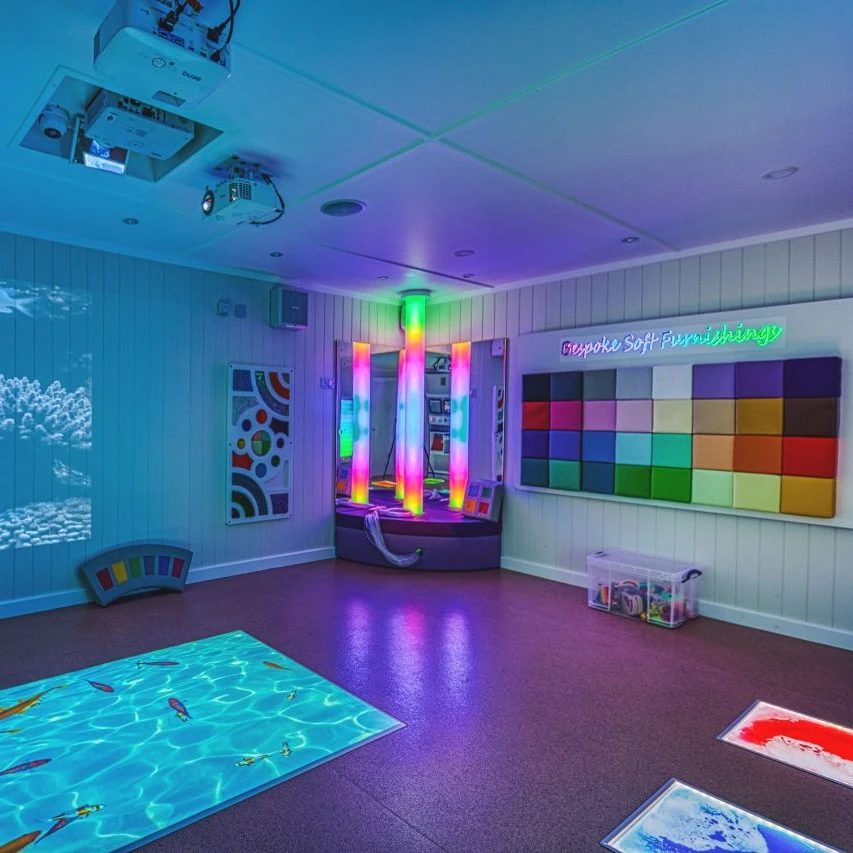
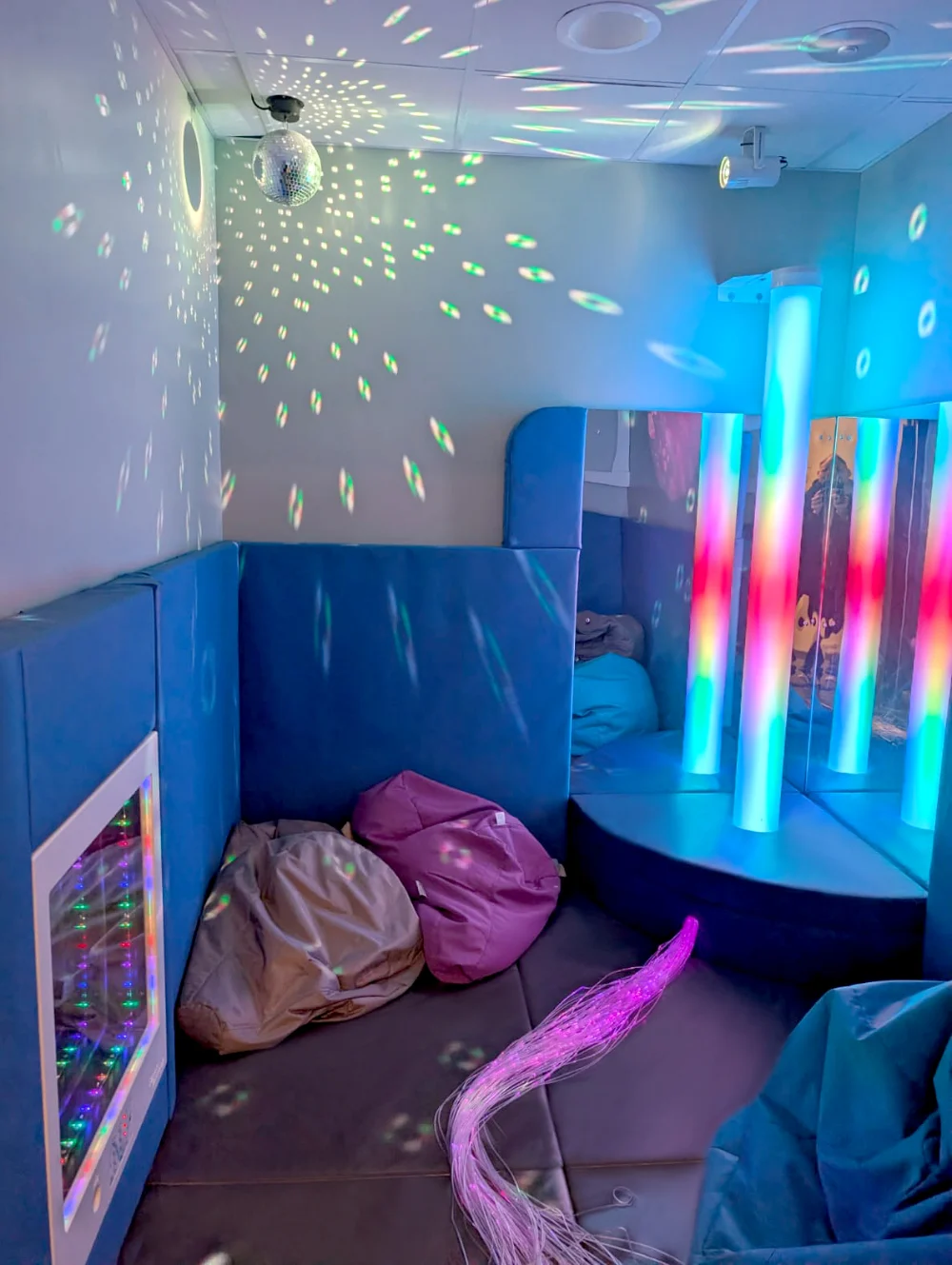
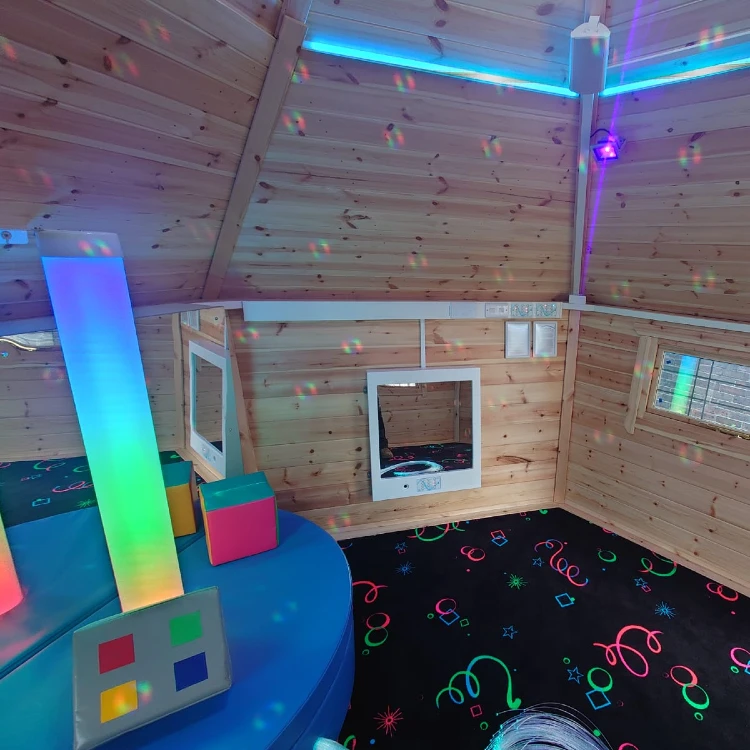
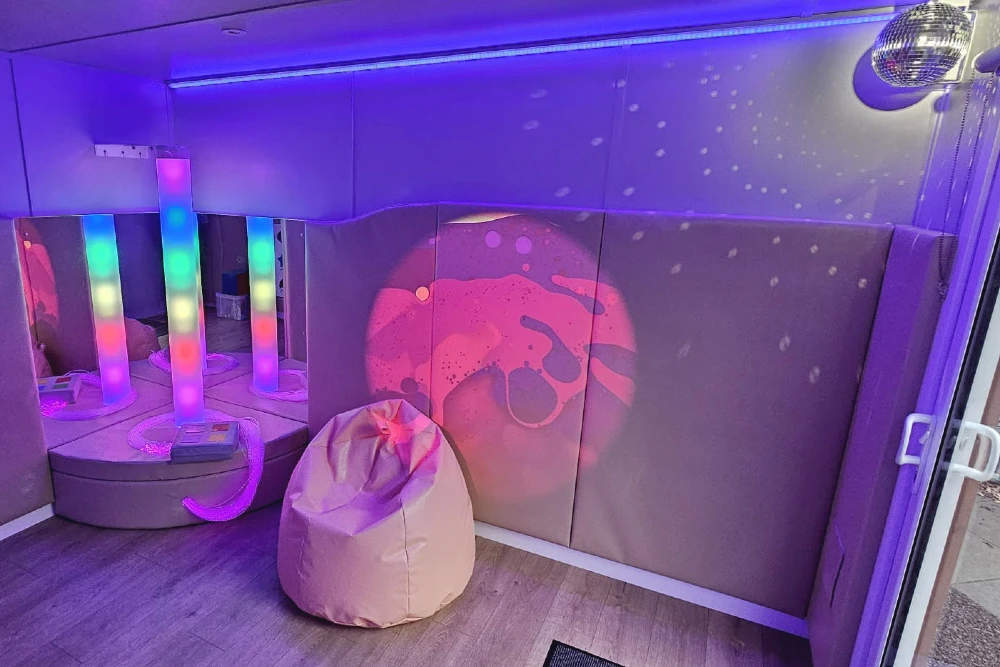
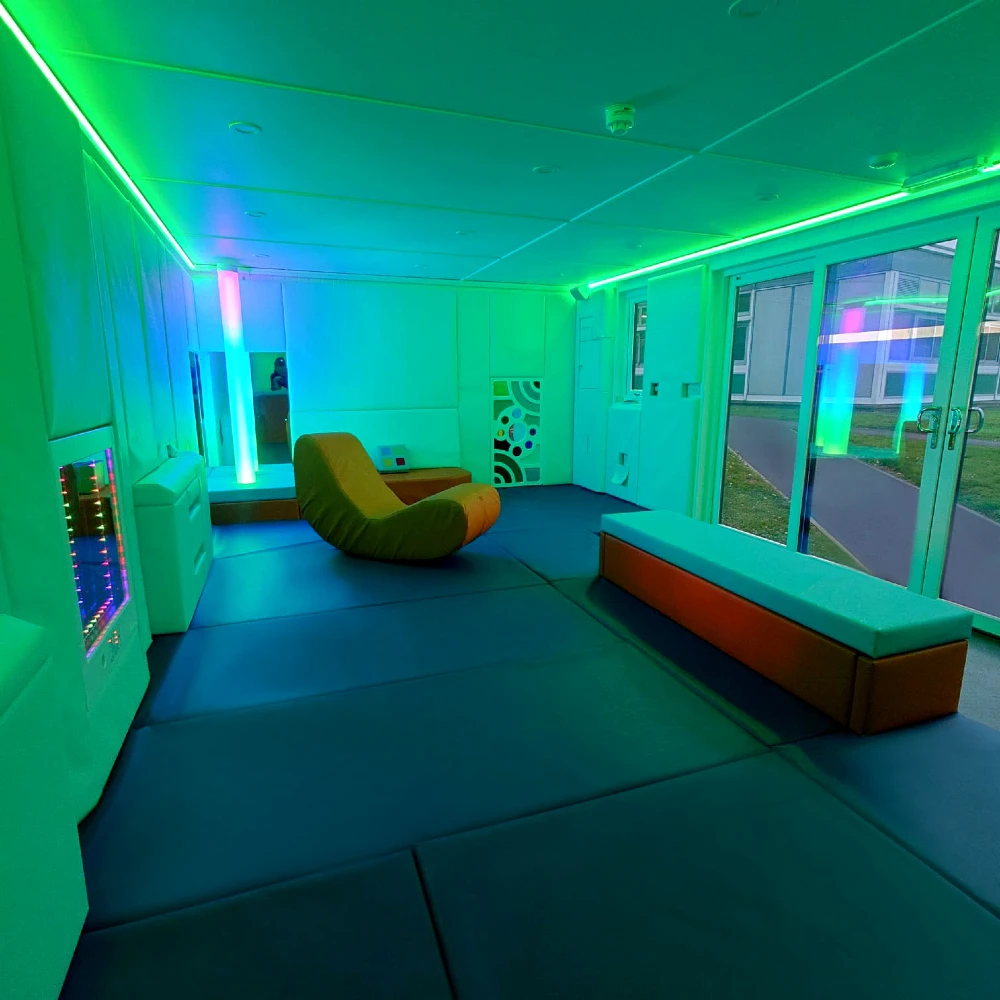
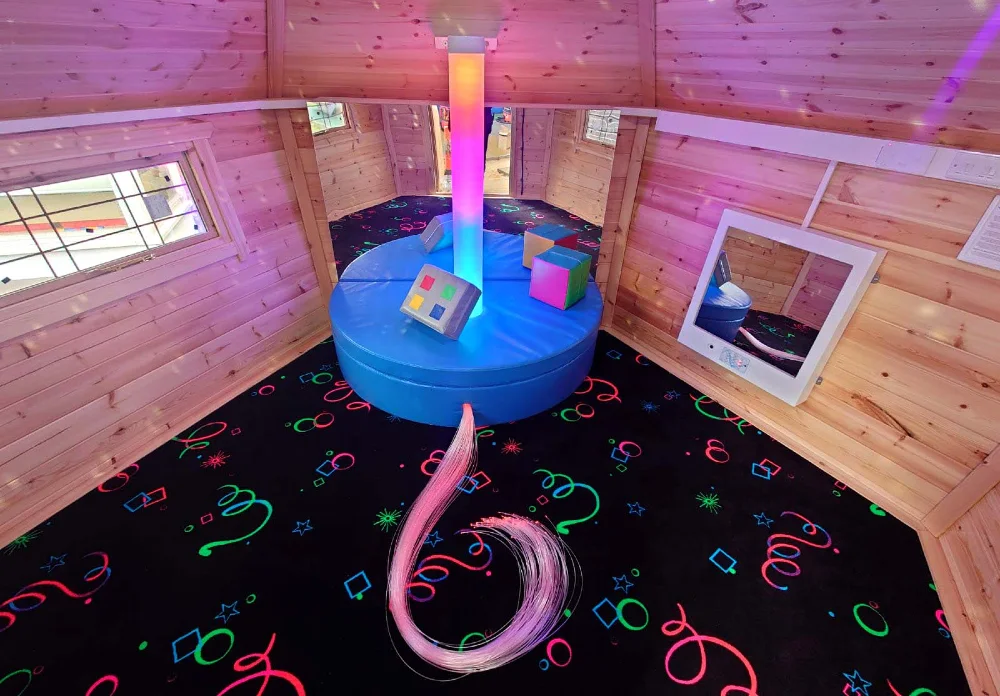
Adjustable lighting helps create different sensory experiences, from calming to stimulating. Options often include LED lighting, fibre optic features and bubble tubes to encourage relaxation and engagement.
- Sound & Audio
The benefit of a seperate modular building for your sensory room means that external noises that would commonly arise during hte main school building are reduced, creating a quieter and calming environment. Integrating bluetooth sound systems and speakers allow schools to play calming sounds, therapeutic audio or integrate their own chosen playlists.
- Soft Furnishings
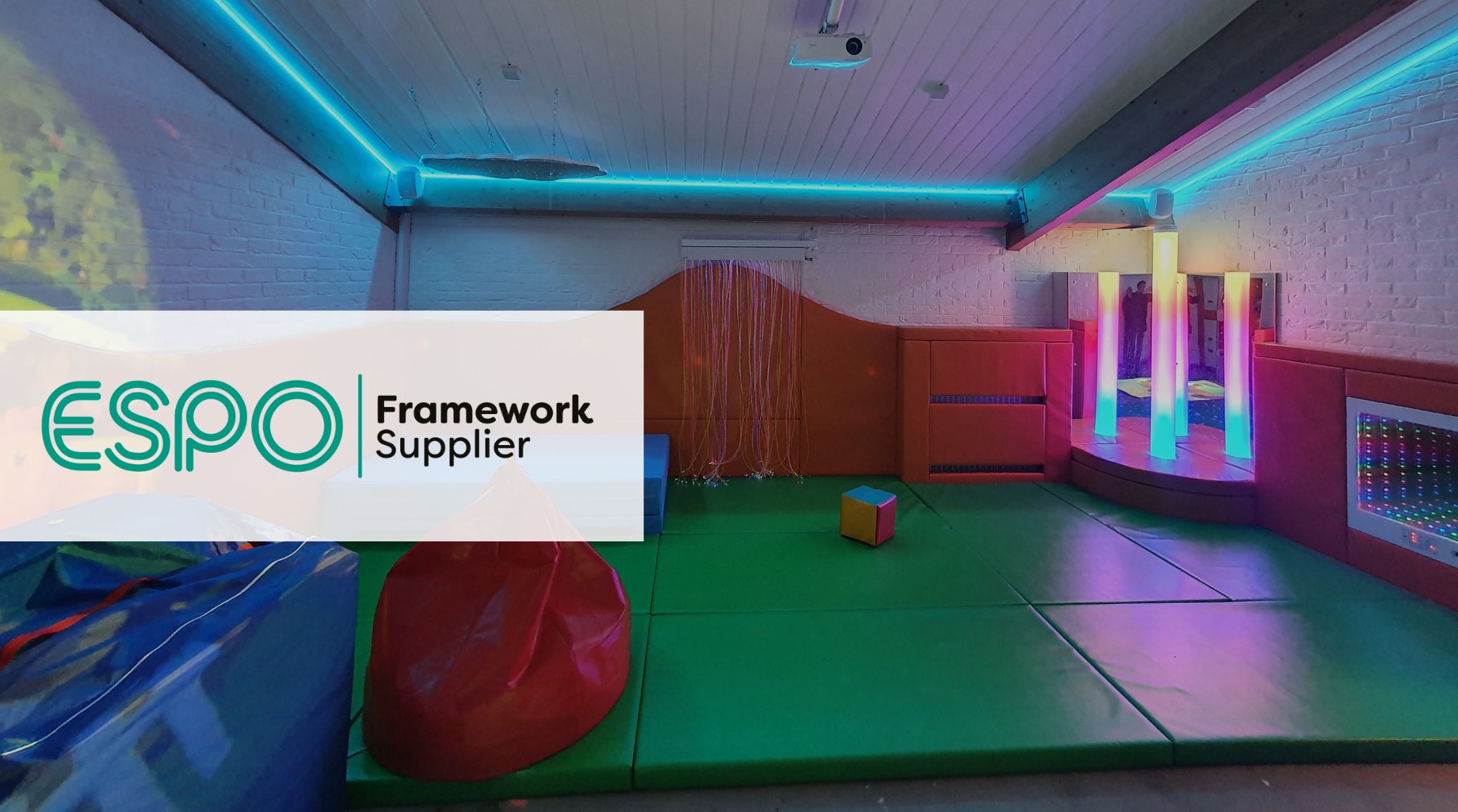
Comfortable, durable furnishings such as bean bags, soft seating and floor and wall padding help create a safe, welcoming space where pupils can relax and self-regulate. all whilst prioritising safety.
- Interactive Equipment
Interactive wall panels, projection systems and user-controls can encourage exploration, communication and engagement while supporting a range of learning and therapeutic activities.
- Accessibility
A well-designed sensory room should be accessible to all pupils. Features such as wheelchair access, safe layouts and easy-to-clean finishes help ensure the space is practical, inclusive and suitable for everyday use.
Our modular sensory rooms are fully bespoke, allowing schools to choose the size, layout and sensory features that best support their students and align with their SEND and wellbeing provision.
A Complete Turnkey Solution Through Our Partnership
With bespoke designs, flexible layouts and the ability to grow alongside your studentsl, modular sensory rooms for schools provide a practical, scalable solution that delivers lasting benefits for students, staff and families alike.
To provide schools with a complete modular sensory room solution, we’ve partnered with Cabins for Schools, combining our expertise in sensory environments with their specialist knowledge in modular education buildings. Together, we design, manufacture and install fully bespoke sensory rooms tailored to your school’s space, budget and student needs.
From the modular building itself to the sensory equipment inside, every project is delivered as a complete turnkey solution – making it easy to create a high-quality sensory space without the complexity of managing multiple suppliers. Schools can even visit our dedicated demonstration showroom to experience a fully fitted modular sensory room before making a decision.