As the importance of person-centred care continues to grow, more adult social care providers are recognising the value of creating dedicated sensory spaces. Adult social care sensory rooms offer more than a calming environment – when created with purpose, they can support wellbeing, enhance daily experiences and complement person-centred care approaches.
Whether you are planning a sensory room for a supported living service, adult day centre or residential care setting, understanding the key considerations behind effective design is essential. In this guide, we explore how to create adult social care sensory rooms that are tailored around individual needs, support meaningful outcomes and become a valuable part of everyday care.
Why Adult Social Care Sensory Rooms Need a Bespoke Approach
Every adult social care setting is different, which means every sensory environment should be designed with its users in mind. A sensory room that works well in one service may not provide the same benefits in another, as each space needs to reflect the individual needs, preferences and outcomes of the people who will use it.
When designing adult social care sensory rooms, it is important to consider a wide range of factors, including the ages, abilities and sensory preferences of users. Some individuals may benefit from a calming environment that helps with relaxation and emotional regulation, while others may need more interactive experiences that encourage communication, movement and engagement.
Many adult social care services support multiple individuals with different requirements, so flexibility is key. A well-designed sensory room should provide opportunities for both individual and group use, allowing the space to adapt throughout the day and support a variety of activities.
Understanding individual care plans and desired outcomes also plays an important role in creating an effective sensory environment. Whether the aim is to encourage independence, reduce anxiety, support communication or provide a safe space for self-regulation, the design should be guided by the people who will benefit from it.
By taking a bespoke approach, adult social care sensory rooms can become flexible, long-term spaces that continue to support changing needs, enhance everyday experiences and provide meaningful benefits for both individuals and care teams.
Understanding the People Who Will Use the Space
The foundation of any successful sensory environment is understanding the people it is designed to support. Every individual experiences sensory input differently, which is why adult social care sensory rooms should be planned around the specific needs, preferences and abilities of those who will use them.
- Adults with Autism – Supporting sensory regulation, reducing anxiety and providing opportunities for controlled sensory exploration.
- Adults with learning disabilities – encouraging communication, engagement and independence through meaningful sensory experiences.
- Individuals with profound and multiple learning disabilities (PMLD) – creating accessible environments that support interaction, comfort and sensory stimulation.
- Individuals living with dementia – providing familiar, calming experiences that can support wellbeing and emotional connection.
- Adults with physical disabilities – ensuring layouts, equipment and controls are accessible and suitable for different mobility needs.
- Individuals with mental health needs – offering a safe environment that can help promote relaxation, emotional regulation and reduced stress.
- Individuals with acquired brain injuries – supporting sensory processing, rehabilitation and personalised engagement.
By taking the time to understand the people who will use the space, adult social care sensory rooms can be designed to provide meaningful, flexible environments that support both individual wellbeing and everyday care.
Designing Around Desired Outcomes
When creating adult social care sensory rooms, it is important to consider what the space is designed to achieve before selecting equipment. By focusing on the desired outcomes, every element of the environment can be carefully chosen to support the needs of the people using it.
Depending on the service and individuals being supported, sensory rooms can be designed to:
- Support emotional regulation – helping individuals manage emotions and respond to sensory input in a comfortable environment.
- Encourage relaxation – providing a calming space to unwind and reduce stress.
- Promote communication – creating opportunities for interaction, expression and connection.
- Increase engagement – encouraging exploration, participation and meaningful activities.
- Support independence – allowing individuals to make choices and interact with the space at their own pace.
- Reduce anxiety – offering a safe and predictable environment that helps users feel more comfortable.
- Provide a safe retreat – creating a dedicated space for self-regulation and time away from busy surroundings.
- Encourage social interaction – supporting shared experiences and positive engagement with others.
With a bespoke design approach, adult social care sensory rooms can be tailored to support multiple outcomes within one space. This is particularly valuable for services where a variety of individuals access the room, allowing different sensory experiences and activities to be incorporated to meet a range of needs.
Key Sensory Equipment For An Effective Adult Social Care Sensory Room
A successful adult social care sensory room combines a range of sensory equipment to create a balanced and supportive environment. From calming lighting and interactive technology to accessible layouts and comfortable furnishings, each element should be carefully selected based on the needs and outcomes of the individuals using the space.
Sensory Lighting
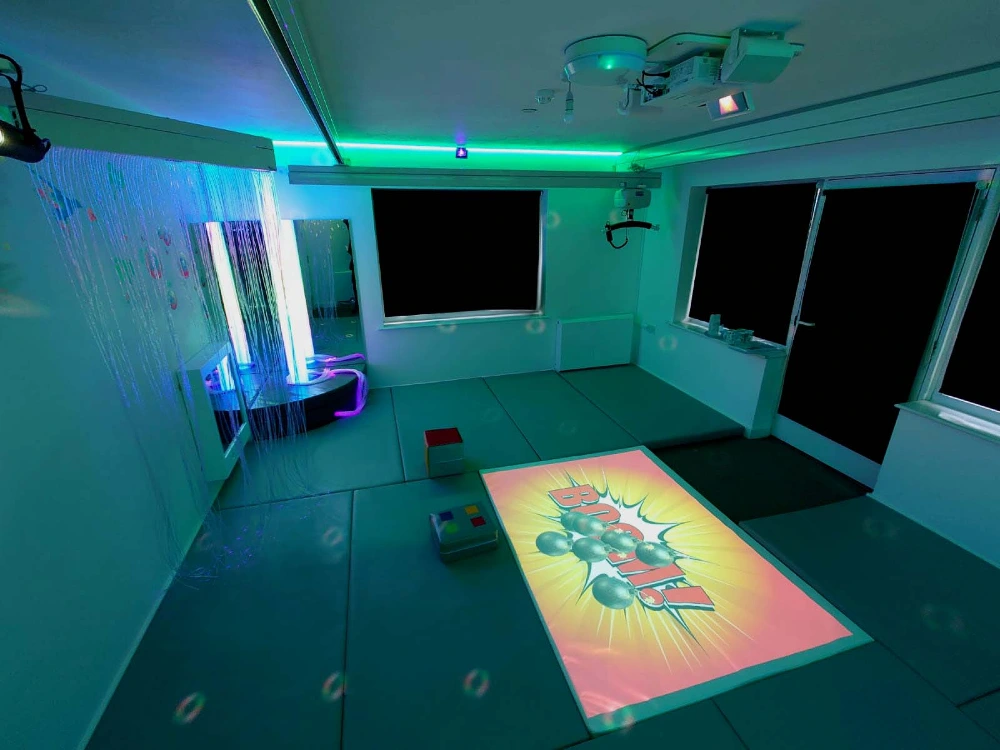
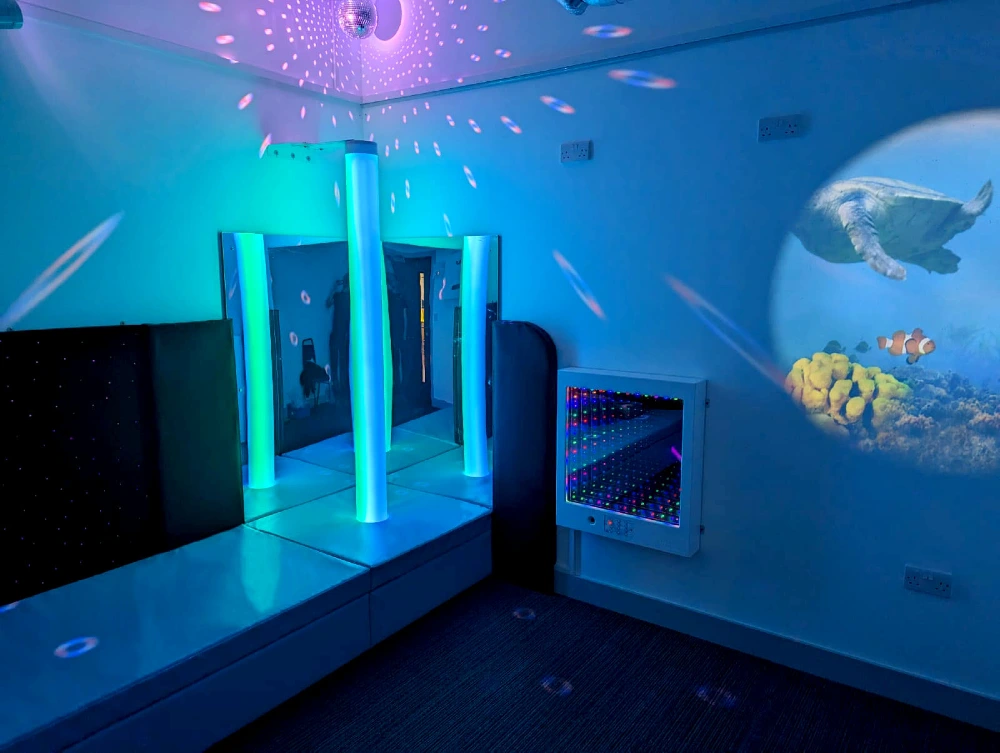
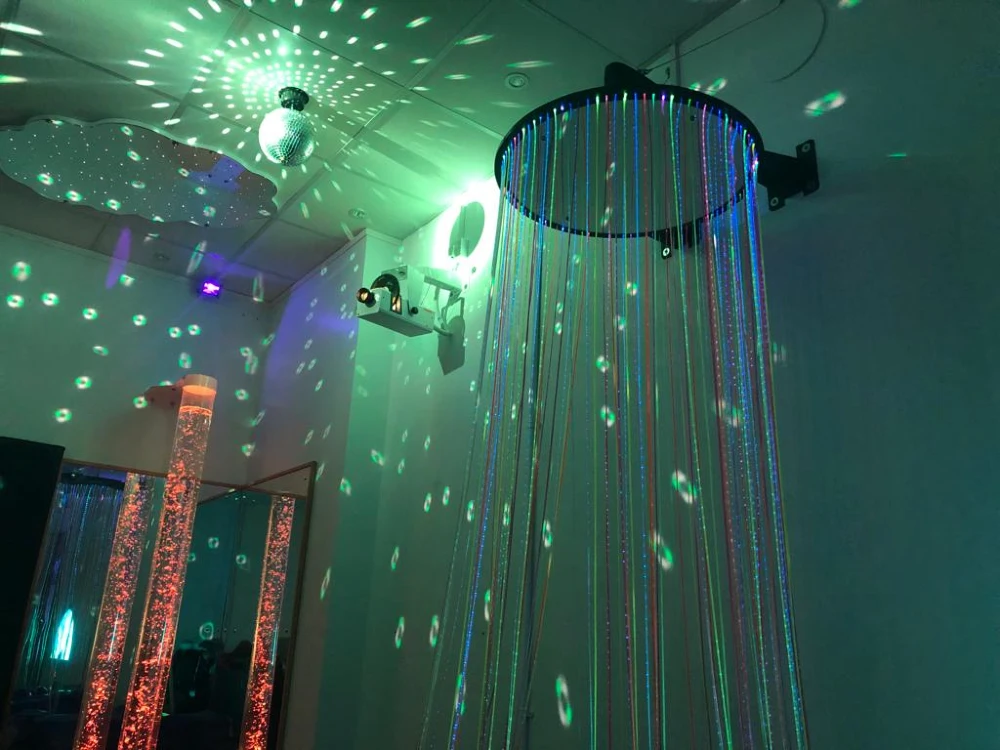
Lighting plays an important role in creating the right atmosphere. Adjustable LED lighting, bubble tubes and calming visual effects can help create relaxing sensory experiences, while allowing users and staff to adapt the environment to suit different needs and preferences.
Tactile Experiences
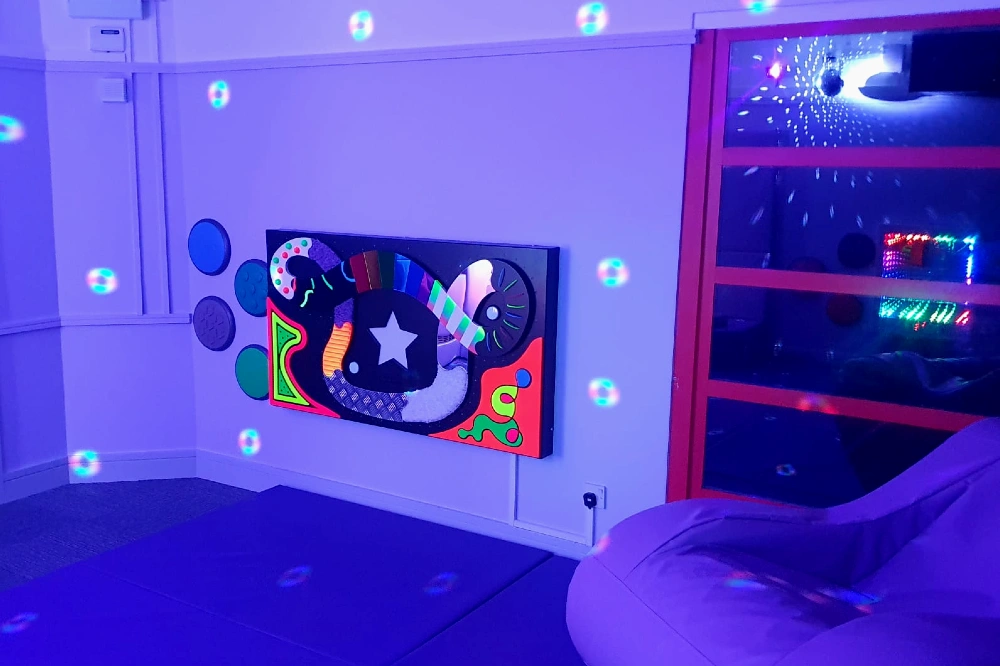
Tactile elements provide opportunities for sensory exploration through touch and interaction. Fibre optics, textured panels and loose sensory objects can support engagement, curiosity and stimulation while catering to different sensory preferences.
Comfortable Furnishings
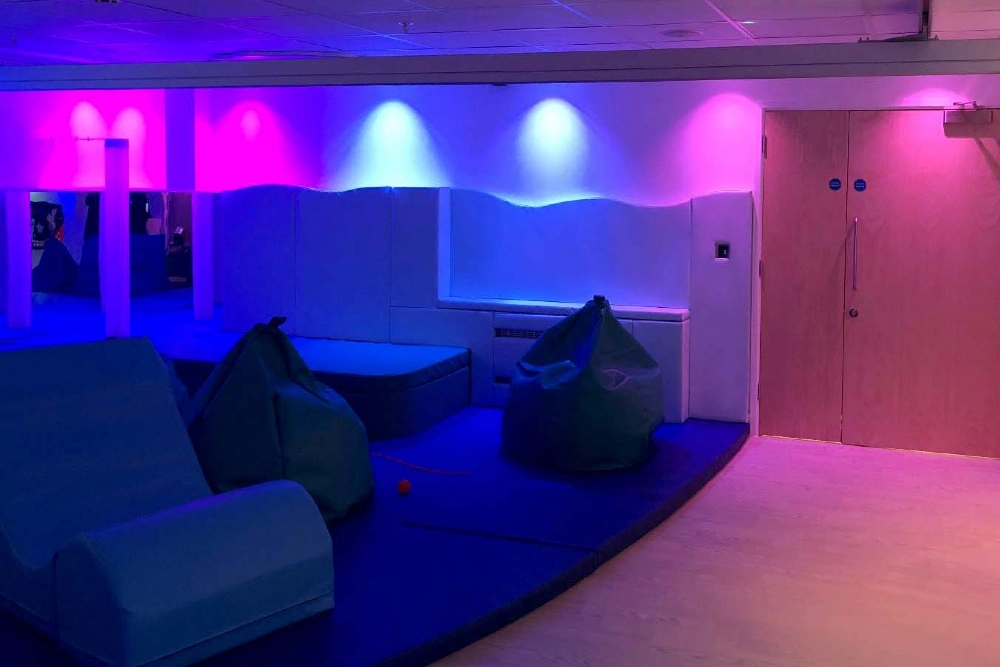
Comfortable and adaptable furnishings help create a welcoming environment where individuals can relax and feel at ease. Soft seating, beanbags, water beds and rocking chairs can provide different options for comfort, positioning and individual use.
Sound & Music
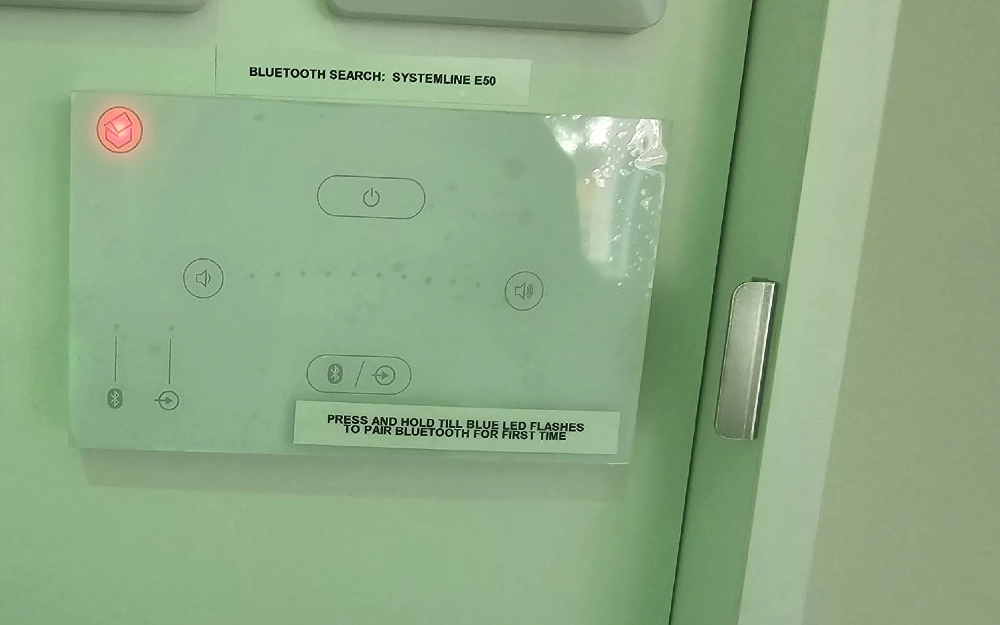
Sound can be incorporated to enhance relaxation, communication and sensory engagement. Music systems, calming sounds and user-controlled audio options allow the environment to be adapted depending on individual preferences and activities.
Space & Accessibility
The layout of a sensory room is just as important as the equipment included. Accessible designs should consider wheelchair access, ease of movement, safe navigation and flexible furniture placement to ensure the space can be used comfortably by everyone.
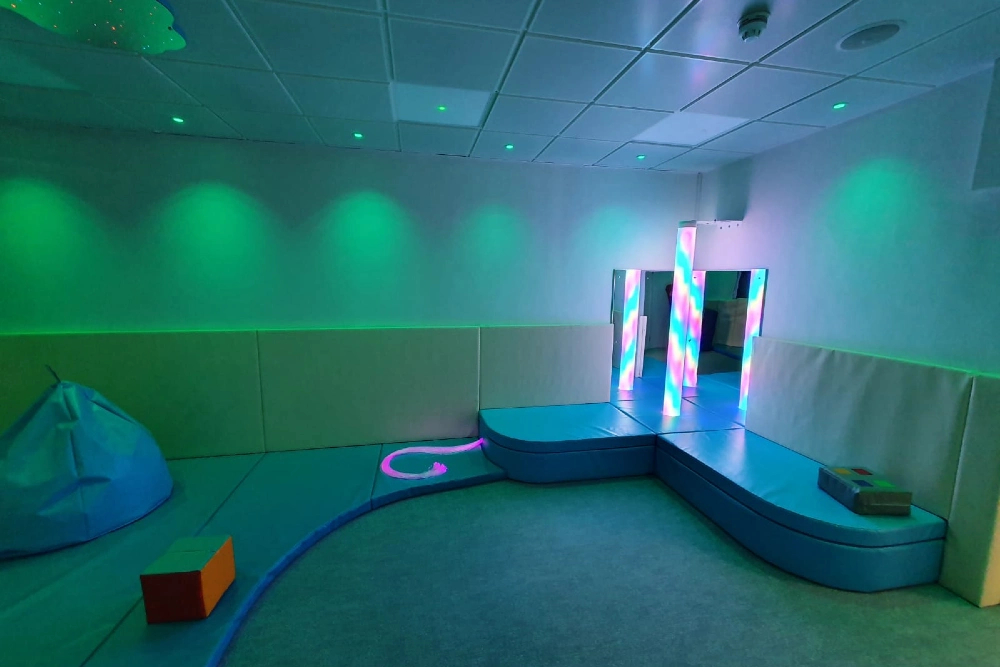
Creating Flexible Spaces for Different Activities
A well-designed adult social care sensory room should be flexible enough to support a variety of activities throughout the day. As different individuals may use the space for different reasons, the environment should be adaptable to suit changing needs, preferences and routines.
Rather than serving one single purpose, a bespoke sensory room can provide opportunities for:
- Quiet relaxation – offering a calming environment where individuals can take time away from busy surroundings and regulate their emotions.
- One-to-one support – creating a comfortable setting for personalised sessions, communication and individual engagement.
- Small group sessions – encouraging shared experiences, interaction and social connection in a supportive environment.
- Activity-based learning – providing opportunities for exploration, participation and developing new skills.
- Sensory exploration – allowing individuals to engage with different sensory experiences at their own pace.
- Mindfulness and wellbeing – supporting relaxation, reflection and emotional wellbeing.
- Family visits – creating a welcoming space where individuals can spend meaningful time with family members.
By considering how the room will be used throughout the day, adult social care sensory rooms can be designed as versatile environments that support a range of individuals, activities and care objectives.
Designing for Staff as Well as Service Users
While adult social care sensory rooms are primarily designed around the needs of the individuals using them, it is equally important to consider the staff who support them. A well-designed sensory environment should be practical, intuitive and easy to manage, helping staff create positive experiences throughout the day.
Features such as easy-to-use controls, adaptable programmes and user-friendly technology allow staff to quickly adjust the environment to suit different individuals and activities. This flexibility supports person-centred care by enabling staff to tailor sensory experiences based on personal preferences, changing needs and specific care goals.
A carefully planned sensory room can also support staff in managing challenging situations by providing a safe space for de-escalation and emotional regulation. By creating opportunities for meaningful engagement, relaxation and interaction, sensory environments can become valuable tools within everyday care routines.
As we’ve explored throughout this guide, taking the time to consider individual needs, desired outcomes, accessibility and everyday use helps create a sensory environment that delivers meaningful, long-term benefits.
Whether you are planning a sensory room for a supported living service, adult day centre or residential care setting, putting these principles into practice will help you create a space that supports wellbeing, encourages engagement and complements person-centred care for years to come.
If you’re ready to take the next step, download our free guide below and contact us today to discuss your project with our expert team.